EPG International

Technical Site Visit
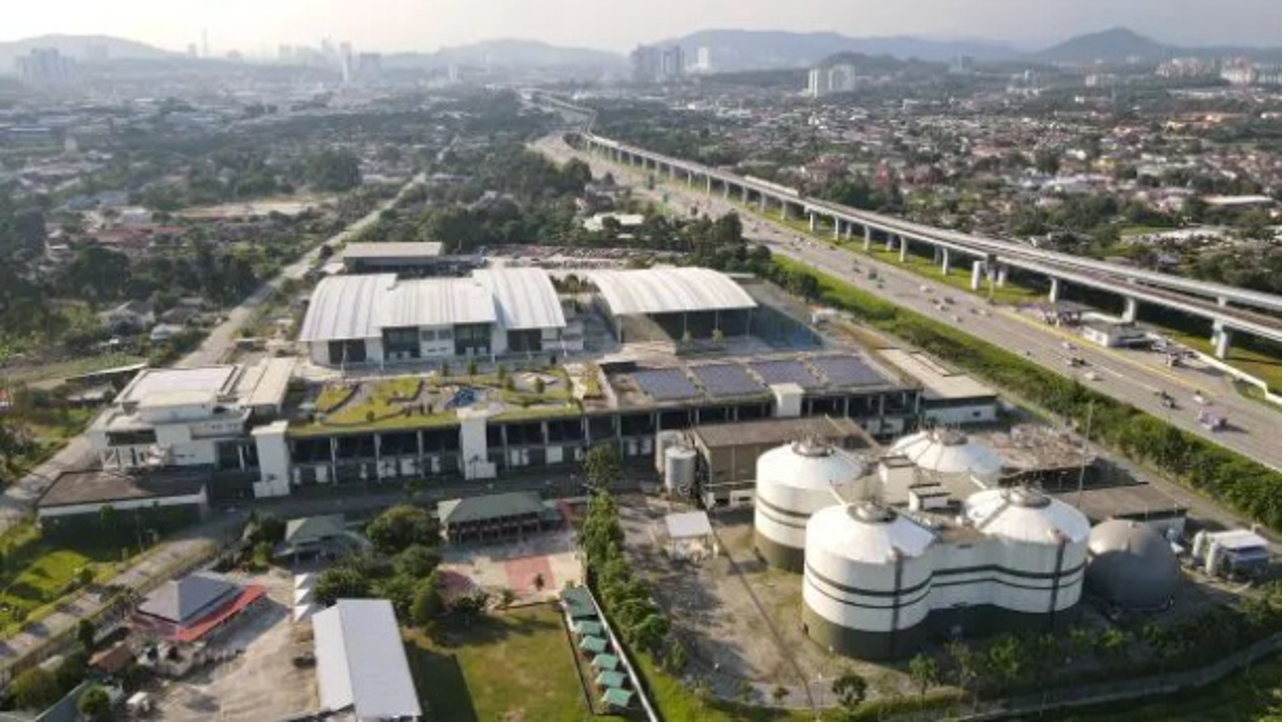
Indah Water Konsortium Sdn Bhd – HLT490 RSTP Langat
The Langat Regional Sewage Treatment Plant (RSTP Langat, HLT490) is one of the Greater Kuala Lumpur anchor projects, implemented by the Sewerage Services Department under the Ministry of Natural Resources, Environment and Climate Change. Drawing on the experience and success of Tokyo’s sewerage system, the plant combines modern treatment technology with green initiatives and public facilities. IWK took over the plant on 25 November 2022.
The plant occupies a 7.3-hectare site and serves a catchment of approximately 77.6 square kilometres. It has a design capacity of 207,000 cubic metres per day, equivalent to 920,000 population equivalents (PE). Its compact, integrated design makes efficient use of space while targeting Standard A, Paragraph (i) effluent requirements, including stringent ammonia limits.
RSTP Langat uses deep aeration with a step-feed, multistage Anoxic–Oxic–Anoxic–Oxic (AOAO) process. In simple terms, sewage passes through alternating zones with low oxygen and supplied oxygen, allowing microorganisms to break down pollutants and remove nitrogen before the treated water is discharged.
Beyond sewage treatment, the plant converts biogas produced from sludge into electricity and reuses treated water within its operations. Solar power and rainwater harvesting further support resource conservation, demonstrating an integrated approach to sustainable water and energy management.
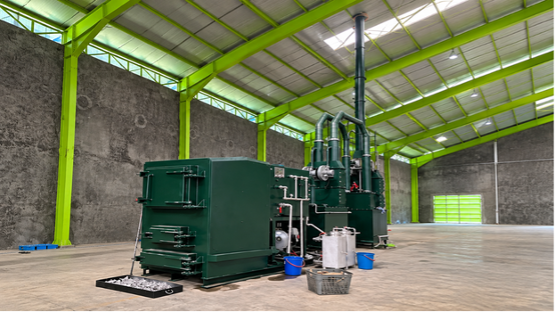
Pamarai Sdn Bhd, a Malaysian-Developed Thermal Degradation Technology
The EcoWaste Asher is a non-complex, straightforward and effective self-sustaining waste treatment system utilising thermal degradation technology to reduce or eliminate municipal solid waste (MSW) into non-hazardous ash without using external fuel such as gas, diesel or petrol.
Capable of off-grid operation, it is designed to achieve up to 98% volume waste reduction or elimination effectively, safely and in an environmentally friendly manner, without using external fuel sources, while ensuring zero to minimal smoke emissions and compliance with U.S. EPA emission standards and allowable limits.
Key Features:
- Zero Fuel Operation: Utilises internal thermal regeneration without fossil fuel in the absence of oxygen. Solar-powered options are also available for off-grid applications in remote locations and challenging terrains.
- Vapour Mixture Release Processing: Advanced plasma technology ensures efficient thermal degradation with minimal visibility of vapour mixture.
- Emission Control: Integrated filtration systems, including carbon trays and alkaline solutions, remove colour, odour and pollutants while supporting compliance with environmental standards.
- Modular Design: Scalable units suitable for communities ranging from as small as 400 households to large populations.
- Low Operational Costs: Annual operational expenditure is 30–50% lower than conventional incineration or waste-to-energy methods.
- Versatile Applications: Capable of processing various municipal waste types without segregation, pre-processing or pre-treatment, including medical and various types of plastic waste materials.
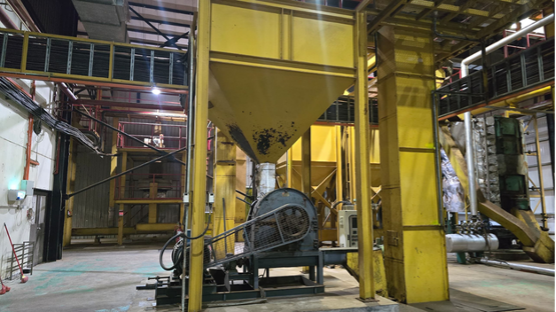
Coconut Oil and Copra Meal Production Plant
MBF Holdings is a diversified group of companies founded in Malaysia in 1963. The group's activities have grown and diversified substantially in a range of sectors and regions to embody one of the Asia-Pacific's leading private conglomerates.
Our legacy dates back to 1930, when we established our coconut plantation in East New Britain Province, Papua New Guinea. Today, our two copra mills in Papua New Guinea collectively yield up to 5,500 metric tons of coconut oil and 2,750 metric tons of copra meal monthly. This extensive network ensures a consistent and reliable supply chain for our global clientele.
WRC Estates, headquartered in Selangor, Malaysia, specialises in producing premium coconut oil and copra meal. The state-of-the-art facility spans 3 acres, enabling the delivery of over 1,000 metric tons of coconut oil and 500 metric tons of copra meal each month.
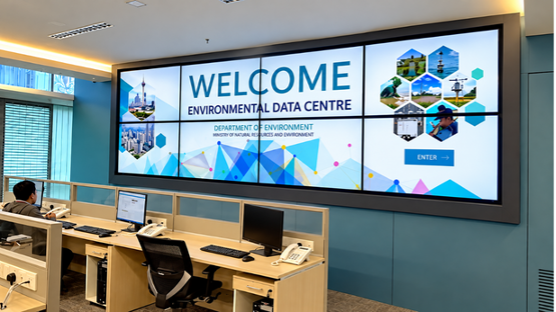
Department of Environment HQ (Putrajaya) Environment Data Center
The Environmental Quality Monitoring Program or EQMP is a program that includes data collection for air quality monitoring, river water quality and marine water quality throughout Malaysia for the purpose of reporting the actual level of environmental quality in the country in an effort to monitor, prevent and control pollution.
The EQMP monitoring system serves as an early warning mechanism for environmental pollution incidents such as haze, oil spills, industrial disasters and illegal disposal of hazardous wastes and toxins. The Environmental Data Center under the EQMP Program displays the environmental data observed through the environmental quality monitoring stations coordinated by the DOE.
Key Features:
- Air Quality Monitoring: Monitors ambient air quality and pollution trends through monitoring stations nationwide, and supports the reporting of Air Pollutant Index (API) readings.
- River Water Quality Monitoring: Collects data from river monitoring stations to assess water quality and identify potential pollution incidents.
- Marine Water Quality Monitoring: Supports monitoring of coastal and marine environmental conditions.
- Early Warning System: Facilitates the detection and reporting of potential pollution incidents, including haze, oil spills, industrial accidents and hazardous waste contamination.
- Environmental Data Management: Integrates monitoring data into a centralised platform for analysis, visualisation, reporting and decision support.